How El Paso Matters turned a 9.15K race into revenue, reach, and new readers
In early 2025, the team at El Paso Matters gathered to brainstorm ways to generate revenue and deepen community engagement. Alyshea Johnson, El Paso Matters’ development and events director, and Bill Pitchkolan, business development director, are both avid runners and had seen other news organizations host races. Why not El Paso Matters? Then assistant editor Pablo Villa added a twist: instead of a standard 5K or 10K, why not create a distance that reflected El Paso itself?
Villa suggested a 9.15K — a nod to the city’s 915 area code. The distance is approachable: longer than a 5K but less intimidating than a 10K. And unlike standard race formats, it felt distinctive and ownable.
The concept stuck.
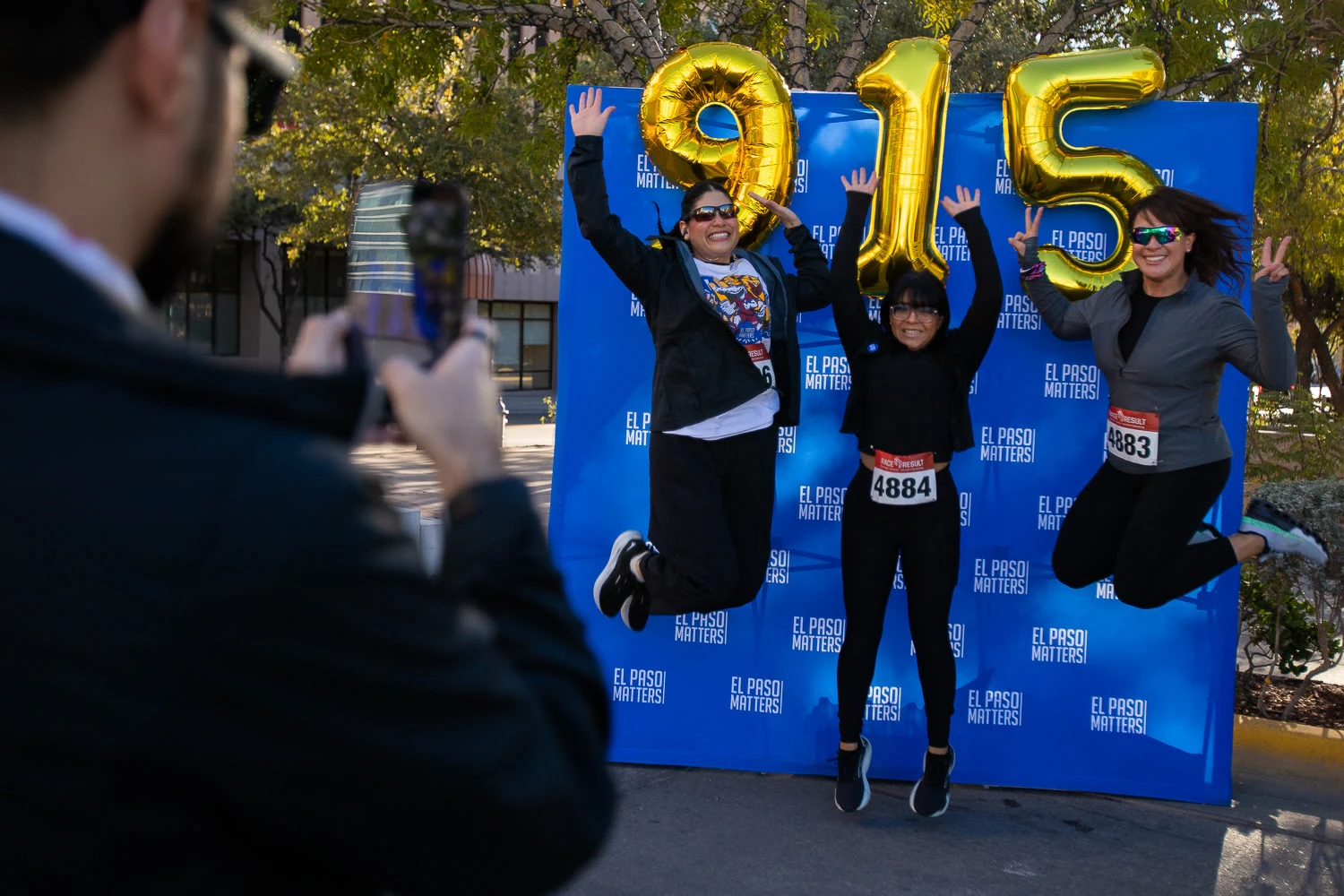
On Sunday, December 7, the inaugural El Paso Matters 9.15K took place — and it exceeded expectations. The team set a goal of 500 registrants; 643 runners signed up. The event generated $39,371 in revenue, with estimated profit between $12,000 and $13,000 after expenses. The race also introduced the newsroom to hundreds of new community members, including younger participants and first-time donors.
El Paso Matters is now planning its next race for mid-September, timed to align with citywide 915 celebrations.
Here’s how they made it happen.
Partnering with experts
One of the first decisions the team made was to not build the race infrastructure themselves.
Instead, they partnered with Race Adventures, a local production company that specializes in organizing running and cycling events. The partnership significantly reduced operational complexity and risk.
“They really did a lot of the logistical work,” said Johnson. Race Adventures handled route permits, registration systems, and race-day infrastructure. The company also covered many of the upfront costs — including permits, medals, and shirts — and reimbursed itself through registration fees before El Paso Matters received the remaining proceeds.
El Paso Matters paid a $250 deposit and covered additional event-related expenses outside the race contract — including a DJ, a local artist for the race shirt design, table and chair rentals for sponsors, printed materials, volunteer refreshments, and a licensed peace officer required for the street closure. Those added costs totaled about $2,800, with some supplies donated by partners.
The downtown race course was designed as a loop, starting and ending at San Jacinto Plaza, El Paso’s historic center. The team closed an adjacent street to create a celebration zone with vendors, sponsors, music, and photo opportunities. The race coincided with the city’s WinterFest celebration — with the plaza decorated for the season — which added to the festive atmosphere and increased foot traffic.
“It worked out perfectly,” Johnson said. “Everybody was able to go onto the park, see the decorations, warm up, stretch, and then line up on the street.” After finishing, runners returned to the same area for the post-race celebration.
One of El Paso Matters’ goals was broad community exposure, and the participant mix reflected that reach. Johnson said the race included experienced runners, walkers, and several first-time participants.
“There were kids, there were older people, and there were younger people,” she said. “It was a healthy mix.”
The power of social media
El Paso Matters set a registration goal of 500 participants and built its marketing plan around the newsroom’s social media accounts, influencer partnerships, and local run club networks.
Of those channels, social media proved to be the strongest driver, Johnson said. “Every time we posted something on social, you would see an uptick in the number of registrants on the (race) website.”
Led by audience engagement reporter Brandy Ruiz, the team leaned into short-form video, trending audio, and story-driven messaging. Their top-performing post — liked by more than 2,600 users — was simple but effective: a photo of a group of El Paso runners paired with captions describing their reasons for running (“chasing a new chapter,” “training for their first race,” “just ran a new PR”). A follow-up slide connected those motivations to the newsroom’s mission, closing with the race tagline: “One Run. Countless Stories.”
Another high-performing post featured local running influencer Danielle Carillo and trending audio. “Cool edit 🙌,” one user commented.
To expand reach, Johnson and Ruiz connected with local running influencers, including Carillo, founder of Girls Run the 915. Carillo’s personal Instagram account has just under 4,000 followers while @girlsrunthe915 has more than 19,000.
“We tapped into influencers and asked them if they wanted to participate in promotion,” Johnson said. Creators were invited to film videos and share content about the event. El Paso Matters offered promo codes as an incentive. “Anybody who participated in any of the promotions got a code for free registration.”
Local run clubs also played a key role. Ruiz had an existing relationship with Girls Run the 915, which she covered in a 2024 story. That connection helped open doors with Run For It, another El Paso-based club with a large social following (24.5K followers on Instagram and nearly 2,600 on TikTok).
“We didn’t really have a connection with them so we just reached out over social,” Johnson explained. A warm introduction from Girls Run the 915 helped build trust. “Since Girls Run was super excited and backing us up, (Run for It) was also into partnering with us.”
Both clubs helped recruit participants by sharing social posts and adding the race to their running calendars. The newsroom kept the lift light for partners, focusing on simple shares and optional team participation.
To further boost sign-ups, organizers offered a trophy for the largest team and a small registration discount for teams with more than 10 members.
Race Adventures added another promotional channel by sending emails to past race participants from its own list — a highly aligned audience already interested in local running events.
‘One Run. Countless Stories.’
El Paso Matters positioned the event as more than a race. The theme centered on identity, place, community, and storytelling — core elements of the newsroom’s mission. The tagline — One Run. Countless Stories. — reflected that focus.

“This is a run that’s about celebrating community — celebrating everyone’s story,” Johnson explained. “At El Paso Matters, that’s what we do. We tell the stories of our community.”
The registration site explained the significance of the race:
“The distance itself — 9.15 kilometers — pays tribute to El Paso’s area code, a symbol of connection and pride. Proceeds support El Paso Matters, your nonprofit newsroom dedicated to telling the stories that matter most to our region. When you register, you’re not just signing up for a run — you’re joining a movement that uplifts community and strengthens local journalism.”
That framing helped the event resonate beyond the running community and supported broader brand-awareness goals — especially among younger audiences who are underrepresented in the newsroom’s typical readership.
The race also created a new audience development opportunity. The team sent a follow-up email to current subscribers, including some race registrants, recapping race highlights and encouraging donations to El Paso Matters. They’re now coordinating with Race Adventures on a follow-up message to remaining registrants, inviting them to subscribe to El Paso Matters and preview the 2026 race.
Lessons for other newsrooms
Although Johnson and her colleagues came up with the idea in early 2025, planning didn’t begin in earnest until August. The event came together in roughly four months — and the team says their biggest lesson is to start sooner than you think you need to.
“I don’t think we realized how big of a lift it was,” Johnson said.
Other key lessons include partnering with experienced event operators rather than building logistics from scratch; designing the event around a distinctive local hook; keeping promotional partnerships simple and low-lift; and building marketing around social-first storytelling rather than relying primarily on email or traditional outreach. The team also recommends budgeting for overlooked line items — like security, permits, and on-site infrastructure — and building in time for sponsor recruitment and influencer coordination.
With earlier planning, expanded partnership reach, potential city grant support, and a larger social push, El Paso Matters is now aiming for 750-1,000 registrants and $50,000 in revenue for its September race.
“Thank you again for running, walking, cheering — and for believing in what we’re building here at El Paso Matters,” Johnson wrote in the wrap-up email. “I can’t wait to welcome you back for next year’s race.”